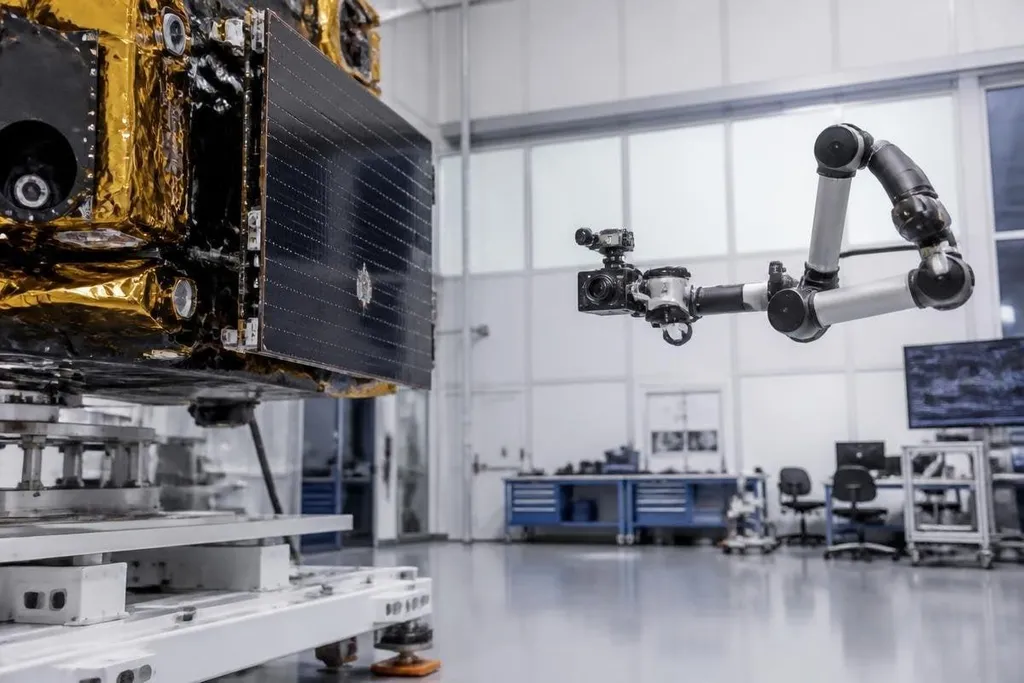
Space robots can inspect spacecraft, move cargo, collect surface material, and repair hardware where a human visit costs far more. The business case depends on turning those tasks into repeatable services, not on showing a robot doing one difficult move once.
- Inspection robots can sell data before they sell physical work.
- Lunar and orbital services need buyers with clear budgets.
- The hardest question is still who pays for access, control, and repair.
The first customers are likely to buy data
A robot does not need to carry a box or fix a satellite to create a business. A camera-equipped inspection unit can collect images of a spacecraft, solar panel, docking port, or external damage. That information can help an operator decide whether to keep, repair, move, or retire the asset.
The customer is paying for a better decision. The provider needs to show what the robot sees, how often it can collect data, and how that data reaches the operator. A service that sends clear images after a scheduled pass may be easier to sell than a system that promises complex repair work later.
This model also limits the first technical step. Inspection needs cameras, communications, flight control, and a safe path around the target. It may not need a robotic arm, a cutting tool, or contact with the spacecraft.
Servicing can create a larger contract
Once a robot can inspect an asset, the next sale could involve physical work. A servicing system might move a satellite, replace a part, connect a fuel line, or remove an object from a planned path. Each task needs a buyer, a method, and a clear rule for what happens if the robot cannot complete the job.
That last point matters because space hardware is hard to reach and harder to repair. A customer may need to pay for a launch, an operations team, ground communications, insurance, and a backup plan before the robot does any work. The robot is one part of the cost.
The business may therefore look more like a scheduled service contract than a product sale. A satellite operator could pay per inspection, per repair attempt, or per mission window. The right choice depends on who owns the robot and who carries the loss if a task fails.
A lunar contract needs more than a mission plan. Robot24.com's space robot reporting can tie a proposed job to the machine, company, price, and stated limits before you decide who can pay for it. Distance changes the bill.
The lunar surface offers work with a direct purpose
Surface robots could move tools, carry samples, map routes, prepare landing areas, or collect material. Those jobs connect to a clear need: a crew or later machine needs a safer path and better knowledge of the ground.
The buyer could be a space agency, a launch company, a research group, or a company planning a lunar service. Each buyer would ask a different question.
An agency may care about science output. A commercial operator may care about delivery time, power use, and the cost of replacing a failed unit.
Lunar work also brings limits that Earth robots rarely face together. A system must handle long communication delays, dust, rough ground, low temperatures, and limited power. A rover that works well in a test area may still need remote control for difficult moves, which adds staff and communication costs.
The strongest early business may sit between full autonomy and direct human control. The robot handles planned movement and routine sensing, while an operator takes over when the ground or task changes.
What remains unproven
The broad idea is easy to describe. The hard part is proving repeat use. A buyer needs evidence that the robot can reach the work site, operate for the planned period, send useful data, and leave the asset safe.
No price, deployment count, or source pack was supplied for this topic, so a purchase case would be premature. The gaps are specific: contract terms, launch cost, repair success rate, control time, spare hardware, and the cost of a failed mission. Those numbers decide if a robot is a service or an expensive demonstration.
I'd back inspection and simple transport before autonomous repair. They ask fewer things of the robot, so a provider can test the service in smaller steps and show the customer what they bought.
A buyer's checklist
Use these checks before backing a space-robot business:
- Name the task: state the object, location, contact method, and result the robot must produce.
- Find the payer: identify the agency, operator, manufacturer, or research group with a budget for that work.
- Price the whole mission: include launch, ground control, communications, insurance, staff, and recovery plans.
- Set the failure rule: decide who pays when the robot cannot reach the target or stops during the job.
- Ask for repeat proof: look for more than one completed task under conditions close to the planned service.
The next useful test is not a harder demo. It is a paid job with a named customer, a fixed task, and a cost that still works after launch and operations are included. Until those figures exist, space robots remain a promising service idea rather than a proven business.